
Подробный разбор по теме в нашем закрытом телеграмм канале ВЭД Логика. В чате можно задать вопрос, посоветоваться с экспертами, поделиться новостью.
New flagship model paves the way for updates to L-series range after disappointing 2025 sales and increased competition.
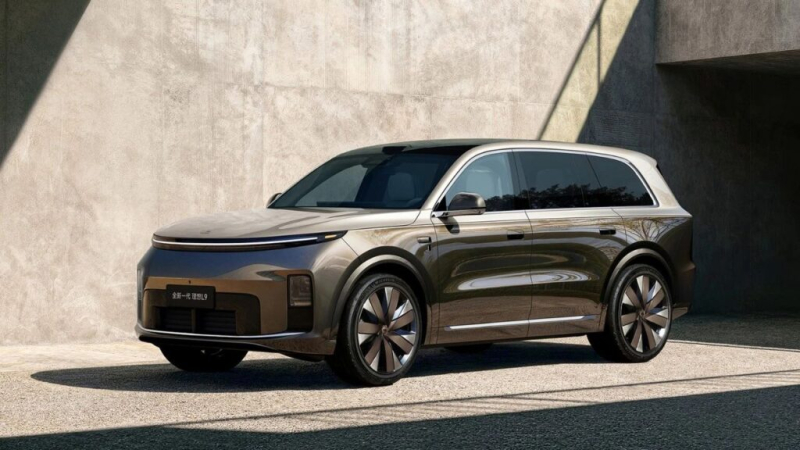
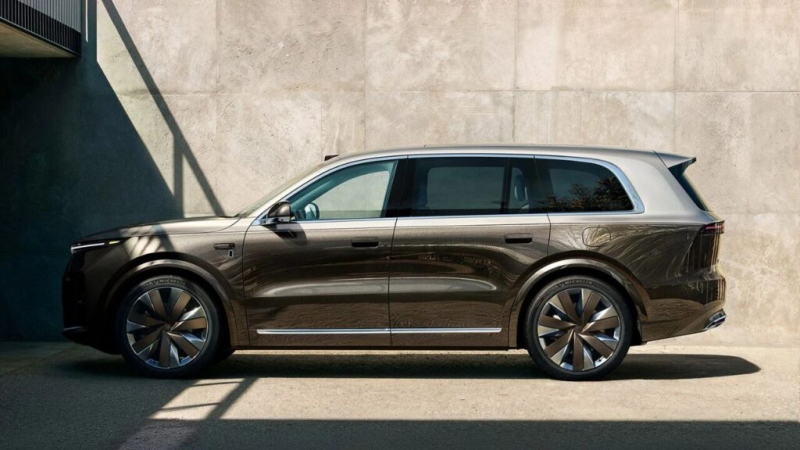
In a bold move to reverse its recent fortunes, Li Auto has pulled the curtain back on the L9 Livis, the top variant of the brand’s next-generation flagship EREV SUV, carrying a premium price tag of RMB 559,800 (approx. $80,600 / £59,400).
It’s the company’s response to its first-ever annual sales dip in 2025 after a period of unmitigated success, and seeks to reestablish the brand’s EREV SUVs as industry leaders against ferocious competition from the likes of the Zeekr 9X, AITO M9, and NIO ES8.
The announcement was made by founder and CEO Li Xiang, who broke a period of relative silence on social media to detail what he described as the “ultimate version” of the L9.
Positioning the vehicle as an “embodied intelligence flagship,” Li signalled a shift away from the “refrigerator, TV, and sofa” marketing that defined the original model four years ago, with the company instead betting on deep technological integration to create a definitive experience gap between it and its rivals.
The timing of the launch is critical. In 2025, Li Auto saw annual deliveries tumble nearly 19% to 406,300 units, falling well short of its previous year’s performance of over half a million vehicles.
While the company’s battery-electric i6 saw growth, the mainstay extended-range lineup faced intensifying pressure from competitors like Huawei’s AITO and Geely’s Zeekr, with the three-row segment in particular growing unrecognisably.
At the heart of the L9 Livis are three “cross-generation” technological breakthroughs, including the debut of the Mach 100, a self-developed 5nm automotive-grade chip, boasting computing power of 1,280 TOPS, which doubles to 2,560 TOPS in the Livis which features two.
This surpasses the capabilities of both XPeng’s Turing AI chip and Nvidia’s Thor-U chip.
This massive processing overhead supports a new “360-degree lidar” array, featuring side-mounted and rear-facing sensors that have fueled industry speculation regarding the car’s readiness for L3 or L4 autonomous driving.
Beyond its digital brain, the L9 Livis introduces significant mechanical upgrades. It is the first production vehicle to comply with China’s new GB 21670-2025 national standards for fully electronic mechanical braking (EMB).
It also features an 800V fully active suspension system capable of generating over 10,000 newtons of lifting force per wheel, allowing the L9 to maintain body control without traditional anti-roll bars, a feat of engineering typically reserved for ultra-premium models like the million-yuan Yangwang U8.
It sits in direct contrast to the Zeekr 9X which opts for a 48V anti-roll bar, and is supported by steer-by-wire and rear-wheel steering functionality, both of which were also announced on the new XPeng GX which surfaced yesterday.
The L9 Livis enters a market that has grown increasingly crowded. With its price point rising significantly over the previous top-spec L9, it sits in direct competition with the Zeekr 9X, which dominated the segment in late 2025 selling over 9,000 units in December.
The 9X itself came in with a surprisingly high price point, in contrast to the NIO ES8 that chopped over RMB 100,000 from its price, which led some to question whether it could be a success, but the market has proven these concerns mute leading Li to follow suit with the Livis.
While Zeekr has focused on mechanical refinement and traditional luxury, Li Auto is doubling down on a software-driven “mobile home” philosophy, seemingly following the route that saw XPeng achieve great success last year.
Looking ahead to the rest of 2026, the premium three-row SUV segment is expected to face even more congestion with the arrival of the NIO ES9 and Volkswagen ID.ERA 9X.
Li Auto executives have indicated that the lessons learned from the Livis will eventually trickle down, as the company plans a major facelift for the entire L-series later this year, standardizing 800V architecture and ultra-fast charging across the lineup to maintain its status as a top-tier contender.