

Подробный разбор по теме в нашем закрытом телеграмм канале ВЭД Логика. В чате можно задать вопрос, посоветоваться с экспертами, поделиться новостью.
14,933 Views
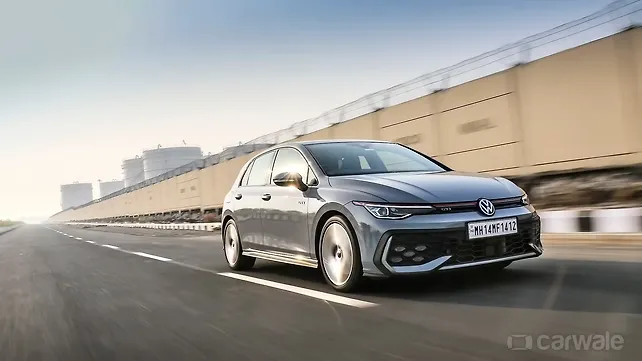
India has two performance cars that have made trends in the recent times. Thanks to combining performance with an ‘accessible’ price, these mechanical twins have become the talk of the town. And if one of these catch phrases (mechanical twins) wasn’t a dead giveaway, we are talking about the Skoda Octavia RS and the Volkswagen Golf GTI – both of which pack in a 2.0-litre motor that churns out 261bhp/370Nm via a 7DSG system. The hype, as we Gen-Z folks like to call it, is real. And this is evident from how all allocated CBUs for both these cars completely sold out.
What are we trying to dig into? Is it an attempt to justify how great these cars are? Not really. They aren’t practical for our roads, owing to very low ground clearance numbers – something that a non-enthusiast would deduce. But the enthusiast mindset transcends acoustic drama. Not only does it dive into what the brand stands for, but it also pays homage to its manufacturing prowess. Is this why we need more these performance cars in India? Partially. What’s the missing piece in this puzzle?
The halo phenomenon
Several carmakers have showcased halo products in India. Fundamentally, halo products are the ones that bake in the absolute best of what a carmaker can do. They showcase the said brand’s engineering prowess. Yes, these cars exist in limited numbers, at a high price, and sometimes, they don’t even contribute to the brand’s profit. However, pouring that big money is important for them.
These products are not merely showcases, they are rolling laboratories – more room for experimentation that doesn’t come with mass-production models. Everything is modified to suit specific tastes. They also help in building perceptions. Say you see a Volkswagen Golf GTI on the road. You hear its grunt, get curious, know more about the car, and then find out that it commands a steep price for an average buyer. But at this point, there’s an image you’ve already formed – the Golf stands for performance and driving dynamics. The same applies to the Skoda Octavia RS.
You now start skimming through CarWale model pages – to know what the brand has in store for you. You like a car (the Skoda Slavia or the Volkswagen Virtus, for example), check its on-road prices, read our reviews, and head out to a dealership for a test. That’s when you understand that both Skoda and Volkswagen have the ‘driver’s car’ DNA. You will walk into a dealership, and, while you may not be able to buy a top-of-the-line Skoda or a Volkswagen, there’s pretty much a high chance of you walking out with a Skoda Slavia or a Volkswagen Virtus.
Halo products not only serve as a showcase of what the brand is really capable of, and, at the same time, build that perception, which leads to a consolidated market positioning. Both Skoda and Volkswagen aren’t mass market brands. They are rather mass-premium ones.
So, why do we need more performance cars?
We don’t need as many performance cars that their presence floods our roads. We aren’t ready for that. Why we need them, is for the aspirational value, brand philosophy, and what the brand can engineer. As we got to know in our previous story, perception-based purchases are a big thing in India. This perception makes brands upkeep the same level of thrill across the board. Not multiple performance cars – just the right ones – is the right formula.